 |
 |
|
|
 |
To gather and distribute
information concerning Southern (Inner) Mongolian
human rights situation and general human rights issues;
|
|
|
To promote and protect ethnic
Mongolians’ all kind of rights such as basic human rights,
indigenous rights, minority rights, civil rights, and
political rights in Southern Mongolia;
|
|
|
To encourage human rights and
democracy grassroots movements in Southern Mongolia;
|
|
|
To promote human rights and
democracy education in Southern Mongolia;
|
|
|
To improve the international
community’s understanding of deteriorating human rights
situations, worsening ethnic, cultural and environmental
problems in Southern Mongolia;
|
|
|
Ultimately, to establish a
democratic political system in Southern Mongolia.
|
|
|
 |
|
|
|
SMHRIC
Statement at "Pathway Forward: UNPFII Debrief and Indigenous
Peace-building as an International Peace, Healing and Security
Issue" |
|
|

|
...
My name is Engehbatu
Togochog, and I am a
Mongolian from the
indigenous Mongolian
community in Southern
Mongolia or known as
“Inner Mongolia” of the
People’s Republic of
China.
I would like to take
this opportunity to
bring to your attention
what is happening in the
six million indigenous
Mongolians’ community in
Southern Mongolia.
Southern Mongolia was
taken over by the
People’s Republic of
China in 1949. During
the past seven decades,
the government of China
took away our political
rights, destroyed our
indigenous way of life
and devastated our
natural environment.
What is happening now in
my community is an
ongoing “cultural
genocide” carried out by
the government of China,
aiming at the complete
erasure of our language
and identity. Starting
September 2023, the
government of China
COMPLETELY banned
Mongolian language in
the entire educational system
from kindergartens to
colleges and all spheres
of public
life. This is happening
as we speak. I would
like to
kindly ask for your
attention to this
massive “cultural
genocide” that is
happening in front of
the eyes of the
international community.
China signed for the UNDRIP (United Nations
Declaration on Rights of
Indigenous Peoples) with
an absurd justification
claiming that “China does not ....
|
|
<details>... |
|
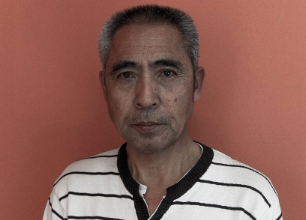
Over 100
rights groups call for the immediate release of Southern Mongolian
dissident Hada |
|
|
|
...
We urge the Chinese
government to
immediately release Mr.
Hada, a prominent
Southern Mongolian
dissident and long-time
political prisoner. He
has disappeared since
February 6, 2025
following his
hospitalization by
Chinese authorities for
an alleged “urgent
medical condition.” His
current whereabouts and
well-being remain
unknown. This latest
development is part of a
30-year long persecution
by the Chinese
government in response
to his unwavering
advocacy for the rights
of the Southern
Mongolian people.
30 Years of
Imprisonment, Secret
Detention and
Disappearance.
In 1995, Hada was
arrested and later
sentenced to 15 years in
prison on charges of
“separatism and
espionage.” Upon
completing his sentence
in 2010, instead of
being freed, he was
subjected to an
additional four years of
extrajudicial detention
and has been under
secret detention ever
since in a place tightly
guarded by the Chinese
Public Security
authorities. His works,
including
Way Out of Southern
Mongolia
and the underground
journal
Voice of Southern
Mongolia,
lay out his ideas on
Southern Mongolian
rights.
Family Implication and
Ongoing Persecution.
Hada’s wife, Xinna, and
son, Uiles, have also
endured relentless
persecution for over 30
years ....
|
|
<details>... |
|
Hada
Nominated for 2025 Nobel Peace Prize by U.S. Lawmakers |
|
|

|
...
U.S. Senator Jeff Merkley and
Representative Chris
Smith have
nominated Southern
Mongolian rights
advocate Hada for
the 2025 Nobel
Peace Prize,
recognizing his
decades-long
struggle for the
rights and
freedoms of the
Mongolian people
in Southern
Mongolia, known
as “Inner
Mongolia”.
Hada has faced
severe
persecution for
his peaceful
advocacy.
In 1995, Chinese
authorities
sentenced him
to 15 years in
prison on
charges
of “separatism” and “espionage.” Even
after serving
his full
sentence,
authorities continued
to detain him
without legal
basis for four
more years.
In 2014, in
extremely poor
health, he
was transferred
to indefinite
secret
detention. In
addition to
Hada’s
suffering,
Chinese
authorities
also detained,
imprisoned and
surveilled his
wife and son,
attempting to
silence his
family’s calls
for justice.
Hada was
nominated
alongside other
prominent human
rights
defenders: Ilham
Tohti, a Uyghur
scholar
imprisoned for
advocating
interethnic
dialogue; Wang
Yi, a Christian
pastor detained
for defending
religious
freedom; Sophia
Huang Xueqin, a
journalist and
women’s rights
advocate;
and Jimmy Lai, a
Hong Kong media
entrepreneur and
democracy
activist. In the
nomination letter Merkley and Smith emphasized ....
|
|
<details>... |
|
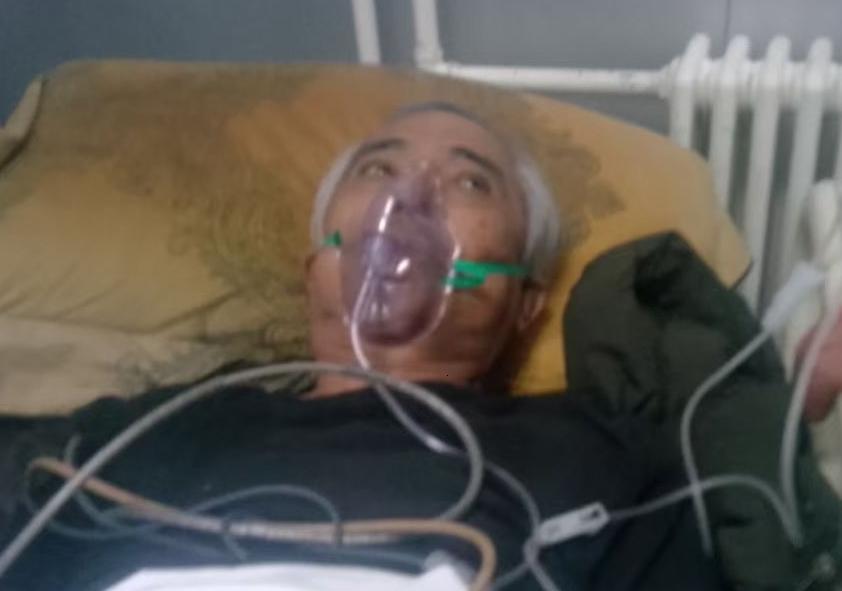
Hada
Rushed to Hospital for Urgent Care as Nobel Peace Prize
Nomination Confirmed |
|
|
|
...
On
January 25, 2025,
prominent Southern
Mongolian political
prisoner Mr. Hada
was rushed to a
hospital in the
regional capital
Hohhot by Chinese
State Security
personnel assigned
to monitor him. The
urgent medical
intervention came
shortly after Hada’s
nomination for the
2025 Nobel Peace
Prize by four
Japanese parliament
members was
confirmed. According
to his wife, Xinna,
Hada remains in the
Intensive Care Unit
(ICU) at the
Affiliated Hospital
of the Inner
Mongolia Medical
University.
Photos and video
footage obtained by
the Southern
Mongolian Human
Rights Information
Center (SMHRIC) from
Xinna show Hada
receiving critical
care, lying on an
ICU bed with an
oxygen mask. One
image reveals severe
bruising on his left
leg, marked by dark
purple and black
spots. “On
January 25, State
Security officials
made multiple urgent
calls to my son,
Uiles, informing him
that Hada was in
critical condition
but refusing to
clarify the cause,”
Xinna told SMHRIC in
a phone interview.
“We rushed to the
hospital and found
him on an ICU bed,
barely conscious.” Xinna
further disclosed
that State Security
officials informed
her and Uiles that
Hada’s condition was
life-threatening due
to alleged multiple
organ failure, and
there was no
guarantee of
survival. Although
a .... |
|
<details>... |
|
|
|
|
|
|